
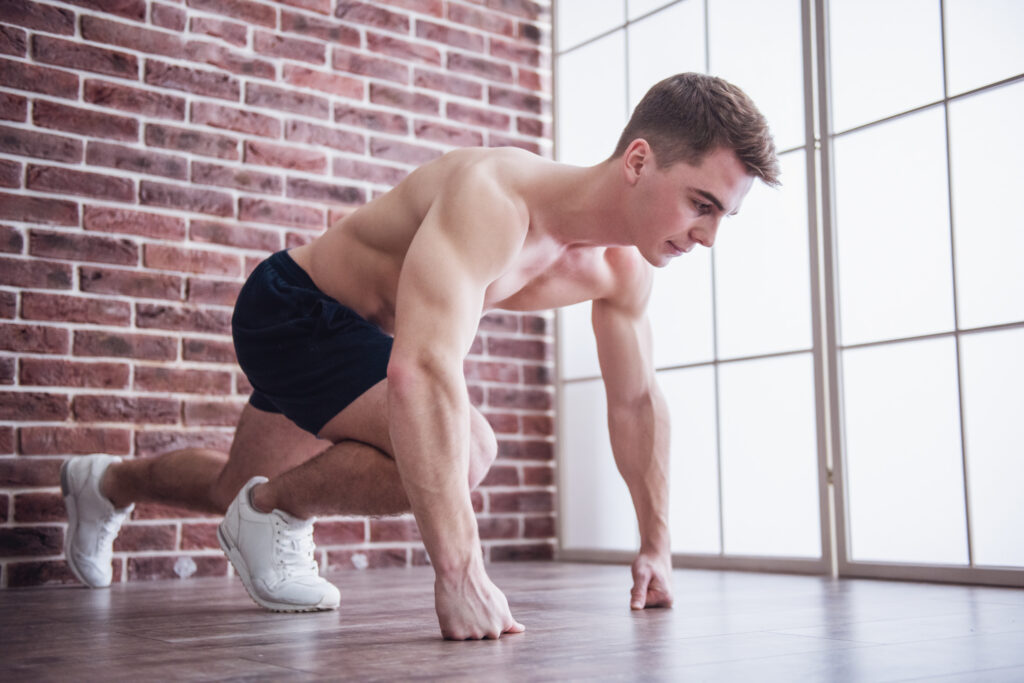
The semitendinosus is one of the three hamstring muscles on the back of your thigh. It runs from the bottom part of your pelvis (the “sitting bone” area) down to the inner side of your upper shin bone, crossing both the hip and the knee. You can think of it as a long strap that helps you bend your knee and extend your hip, which is the motion of driving your leg backward.
In everyday movement and training, the semitendinosus works hard during walking, running, sprinting, jumping, and anything that involves hinging at the hips. When you do exercises like Romanian deadlifts, hip hinges, glute bridges, good mornings, hamstring curls, and many lunge variations, this muscle helps control the movement and produce force. It is also very active when you decelerate, such as when you slow down from a sprint or lower a weight under control.
For your goal of visible abs, the semitendinosus matters because strong hamstrings support better posture and pelvic control. If the hamstrings are weak or poorly coordinated, people often compensate by over-arching the lower back or losing hip stability, which can make core training less effective and increase injury risk. Strong, well-trained hamstrings help you keep your pelvis and ribcage stacked more easily during lifts, carries, and ab-focused work, allowing your abs to do their job without your lower back taking over.
You might also hear it mentioned in injury discussions because hamstrings are commonly strained, especially during sprinting. Building strength through full ranges of motion, improving control during the lowering phase, and progressing speed work gradually are key ways to keep the semitendinosus resilient while you train hard.